Home Services Retaining Wall Installation & Repair

Retaining Wall Installation & Repair in Corinth, TX

Retaining wall installation and repair holds back sloped soil, stabilizes graded yards, and protects foundations, patios, and driveways from shifting earth. Homeowners along the rolling terrain near Lake Lewisville and property managers with terraced landscaping rely on it most, since expansive clay soil swells and contracts with each wet-to-dry season. Our crews build with engineered drainage gravel, geogrid reinforcement, and properly compacted base courses, then correct leaning or bowing walls through re-footing and tieback repair. Scheduling for 2026 spring and summer projects is open now. Corinth Concrete Contractors Elite handles the assessment, build, and final walkthrough.

Request a Written Estimate 940-305-2078

Request A Service

Retaining Wall Service Overview

What Our Retaining Wall Installation & Repair Service Includes

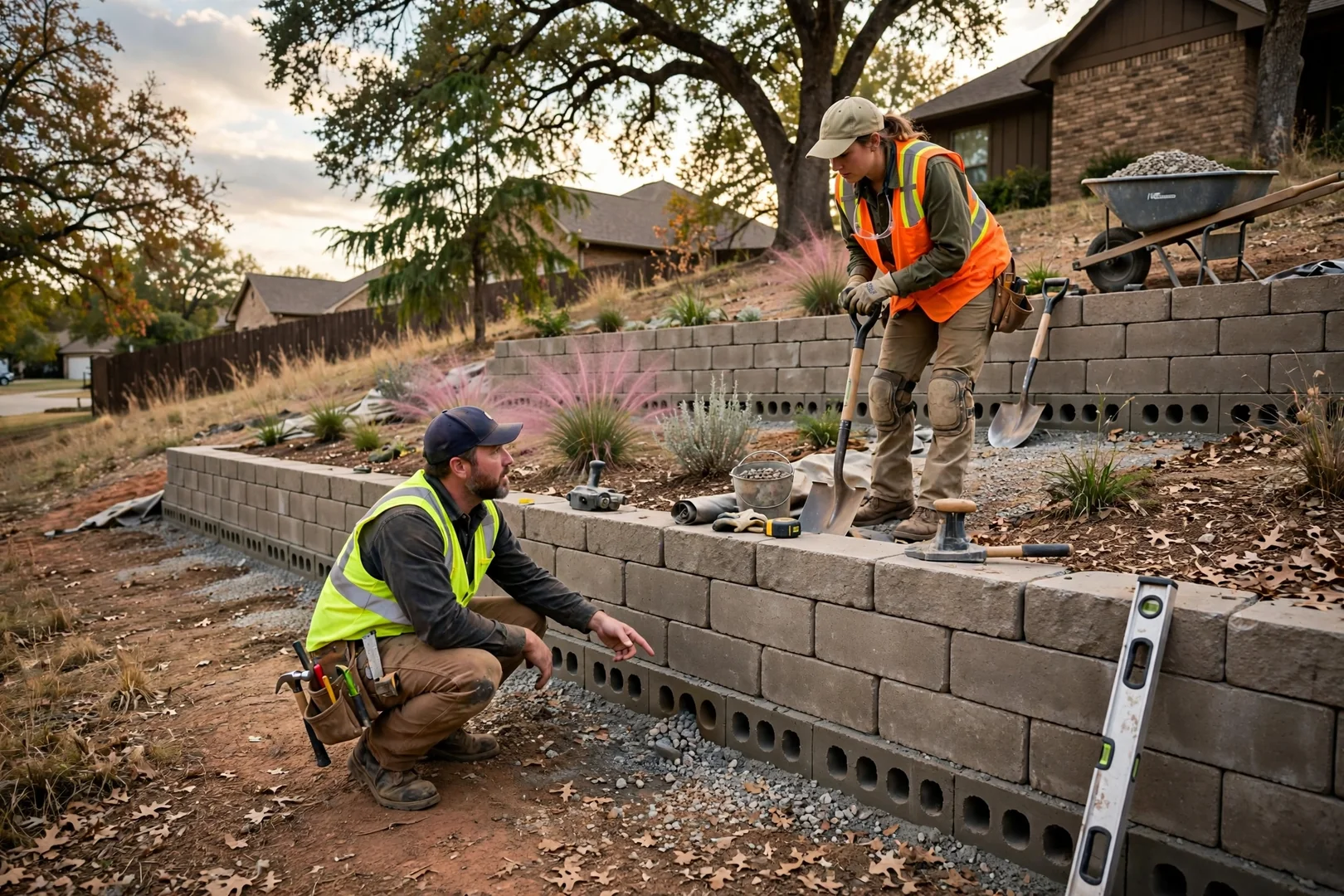
Retaining wall installation and repair is the process of designing, constructing, or restoring a load-bearing structure that resists lateral soil pressure on a slope, and at Corinth Concrete Contractors Elite it includes site grading, footing excavation, drainage design, block or poured concrete construction, and repair of failing walls across Corinth properties. Every project starts with a slope and soil review, because the clay-heavy ground here expands after heavy spring rain and shrinks through dry August heat, which is the leading cause of wall rotation. Crews excavate to stable subgrade, compact a crushed stone base in lifts, set the first course dead level, then build upward with batter, geogrid layers, and a perforated drain tile wrapped in filter fabric and washed gravel. Backfill is placed in stages and compacted so hydrostatic pressure never builds behind the face. Repairs may involve partial disassembly, footing underpinning, helical tieback anchors, cap replacement, or weep hole correction depending on what the inspection shows. We work on single-family yards, HOA common areas, multi-unit complexes, and commercial lots. For 2026, written estimates include a drainage plan and a post-job walkthrough.

Tiered concrete block retaining wall with gravel drainage layer on a sloped Corinth backyard

What Signs Mean Your Property Needs Retaining Wall Repair?

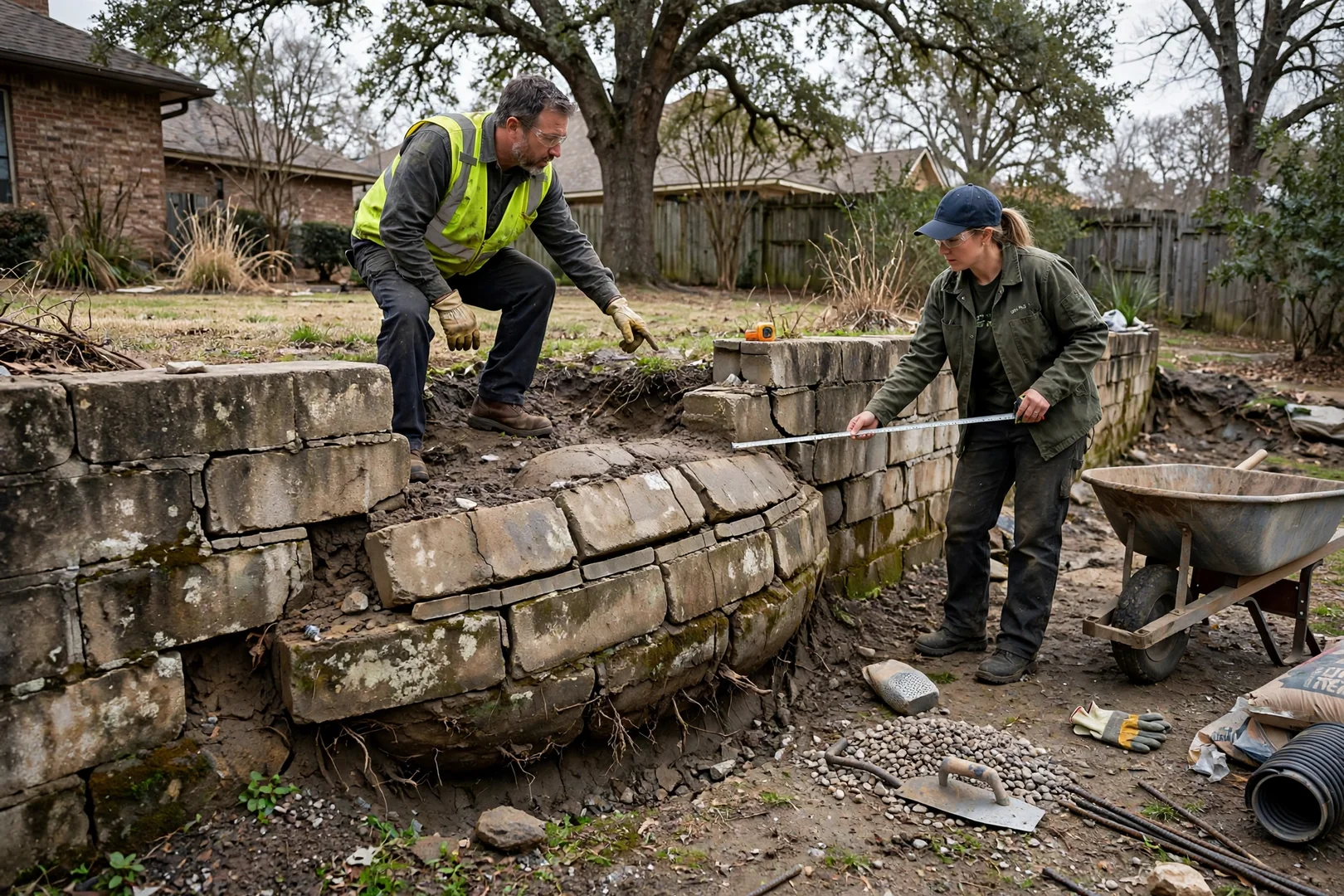
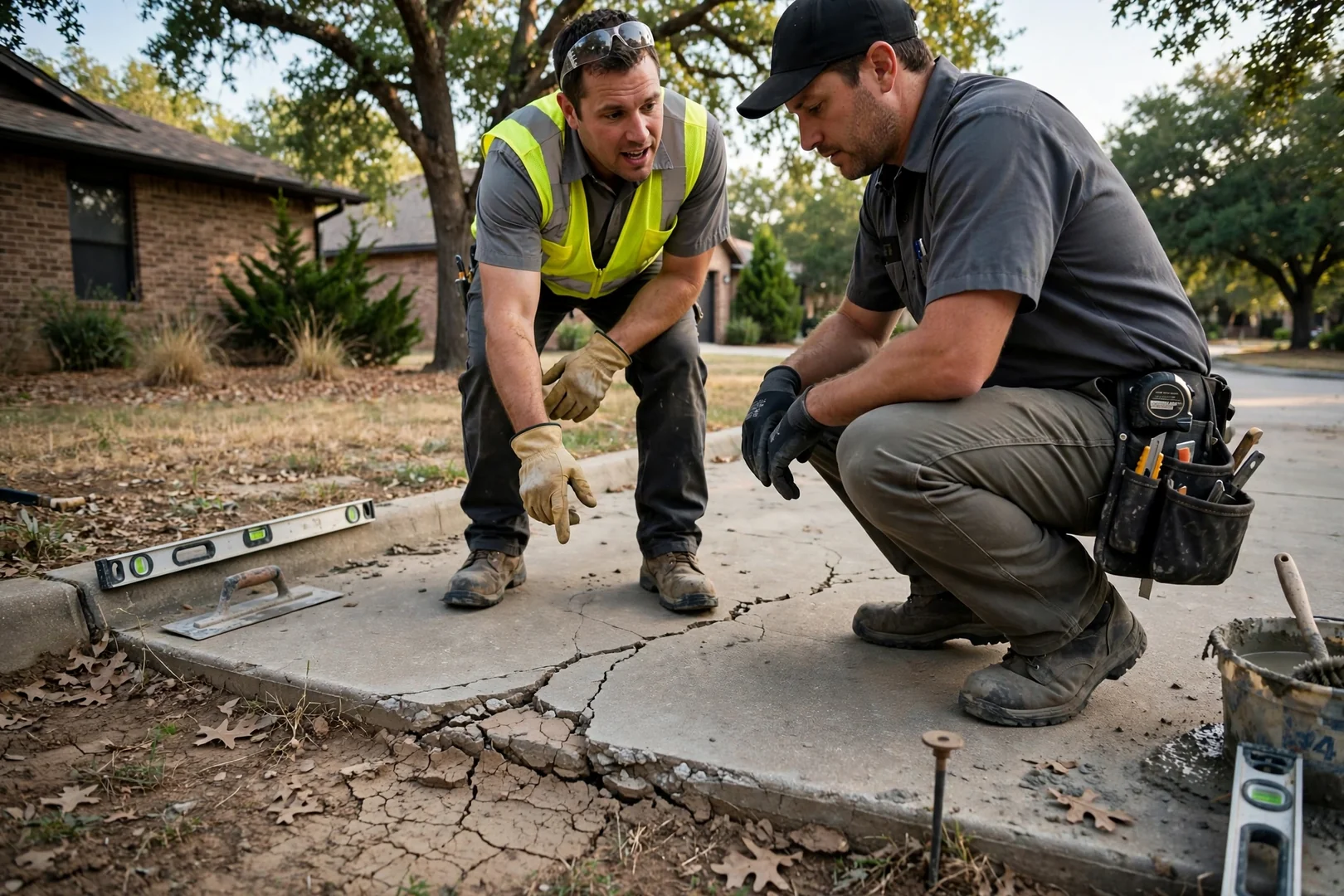
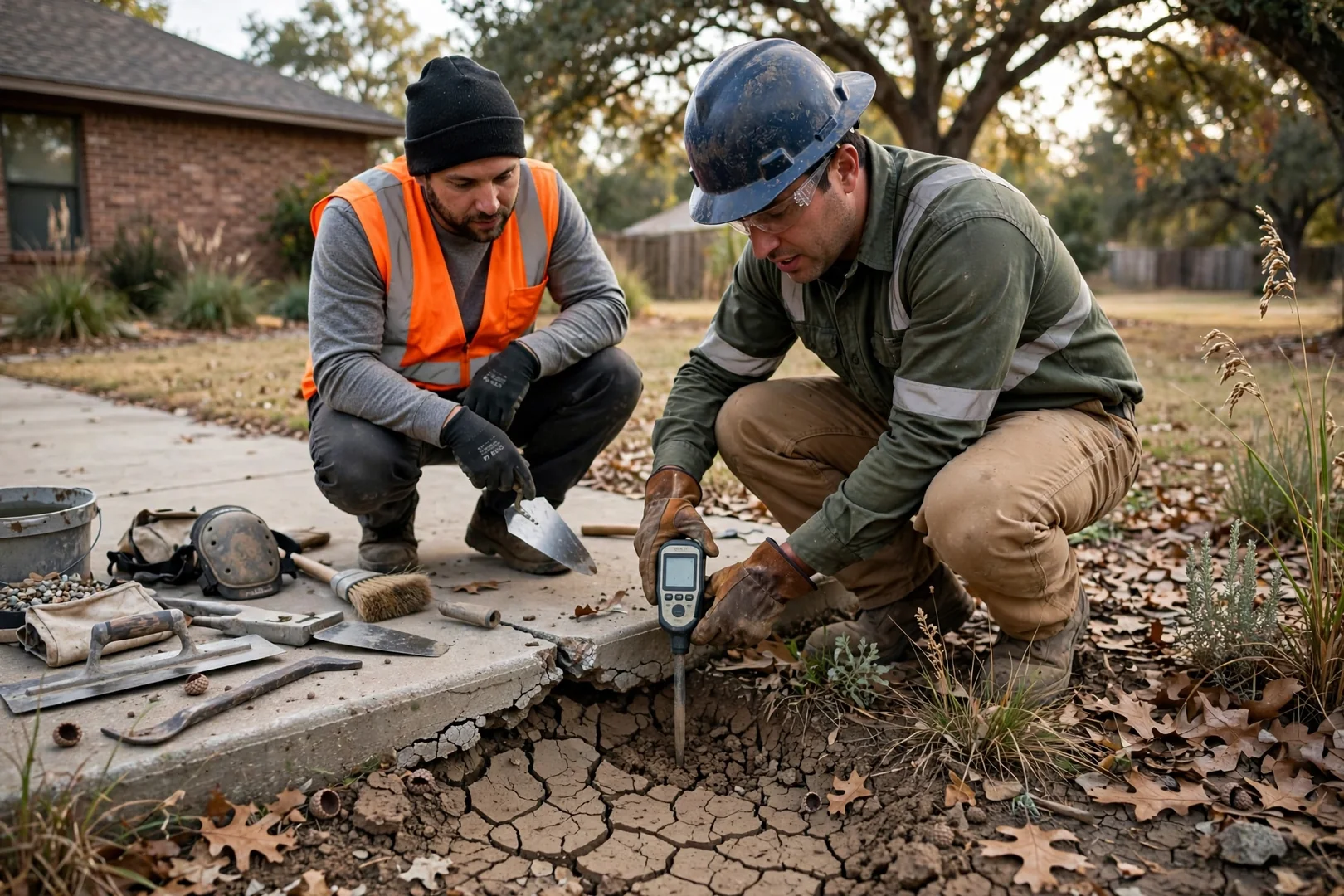
Leaning or bulging wall faces, stair-step cracking through block joints, and soil washing out over the cap are the clearest signs a retaining wall needs attention. Many Corinth yards show wall rotation first at the tallest section, where lateral earth pressure and saturated backfill combine after a heavy storm. Watch for separated caps, gapping vertical joints, rusted or snapped tieback hardware, and dry weep holes that should be draining after rain. Efflorescence staining and settlement sinkholes behind the wall usually mean the drain tile is clogged with silt or roots. Sloped patios and fence lines that have started tilting toward the wall point to the same movement.

Soil conditions drive most of it. The expansive clay common through this area swells during wet spring months, then pulls away in summer, loosening compaction behind the face and shifting footings out of plane. Mature oak and elm roots add pressure along property lines, while runoff from neighboring lots overloads walls that were built without proper gravel backfill or filter fabric. Through 2026 we are seeing more repair calls on walls built fifteen or more years ago with no reinforcement grid. Properly engineered installation or targeted repair, with corrected drainage and compacted base, stops the movement and restores the grade the wall was built to hold.

Schedule a Wall Inspection
Leaning retaining wall with stair-step cracking and soil erosion behind the top cap

Retaining wall pricing in Corinth depends primarily on wall height, linear footage, drainage requirements, and the block or poured concrete system selected, with most 2026 projects falling inside predictable local ranges once those variables are measured. Height drives engineering needs, since taller walls require deeper footings, geogrid reinforcement, and sometimes stamped structural review. Soil behavior matters just as much here. The expansive clay common across Denton County holds water and pushes against poorly drained walls, so gravel backfill, filter fabric, and perforated drain tile are line items we never skip.

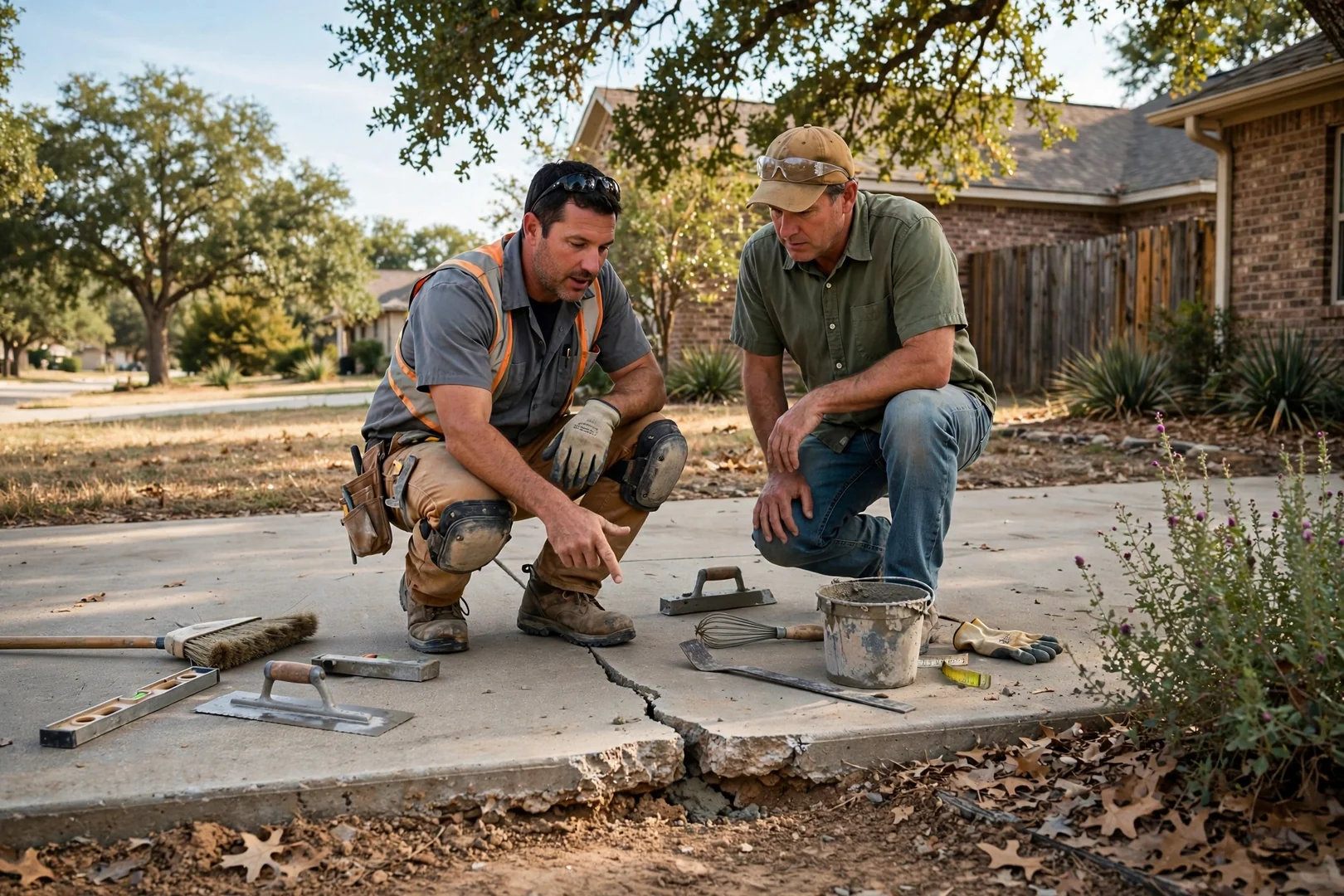
Site access also affects labor hours, because sloped backyards and tight side-yard gates limit equipment and shift crews toward hand excavation and wheelbarrow hauling. Repair work prices differently than new construction, depending on whether we are resetting bulged courses, rebuilding a failed base, or correcting hydrostatic pressure behind an existing wall. Exact numbers require a walk of the property, grade measurements, and a look at how water moves across the lot. Every Corinth homeowner receives a free written estimate that itemizes materials, drainage components, and labor before any work is scheduled.

Retaining Wall Pricing Factors

How Much Does Retaining Wall Installation Cost in Corinth?

What Shapes Your Wall Estimate
Tiered block retaining wall with gravel drainage backfill on a sloped yard
Request a Free Written Estimate 940-305-2078

Our Retaining Wall Process

How Do We Perform Retaining Wall Installation in Corinth?

Crew setting the first course of a concrete block retaining wall over a compacted gravel base

Site Assessment and Drainage Plan

Work begins with grade measurements, soil review, and a study of how runoff travels across the property. We mark utility locations, confirm setback distances, and document existing cracking or bulging with photos. The findings become a written scope that specifies wall height, base depth, drainage components, and reinforcement before pricing is finalized.

Excavation, Base Preparation, and Build

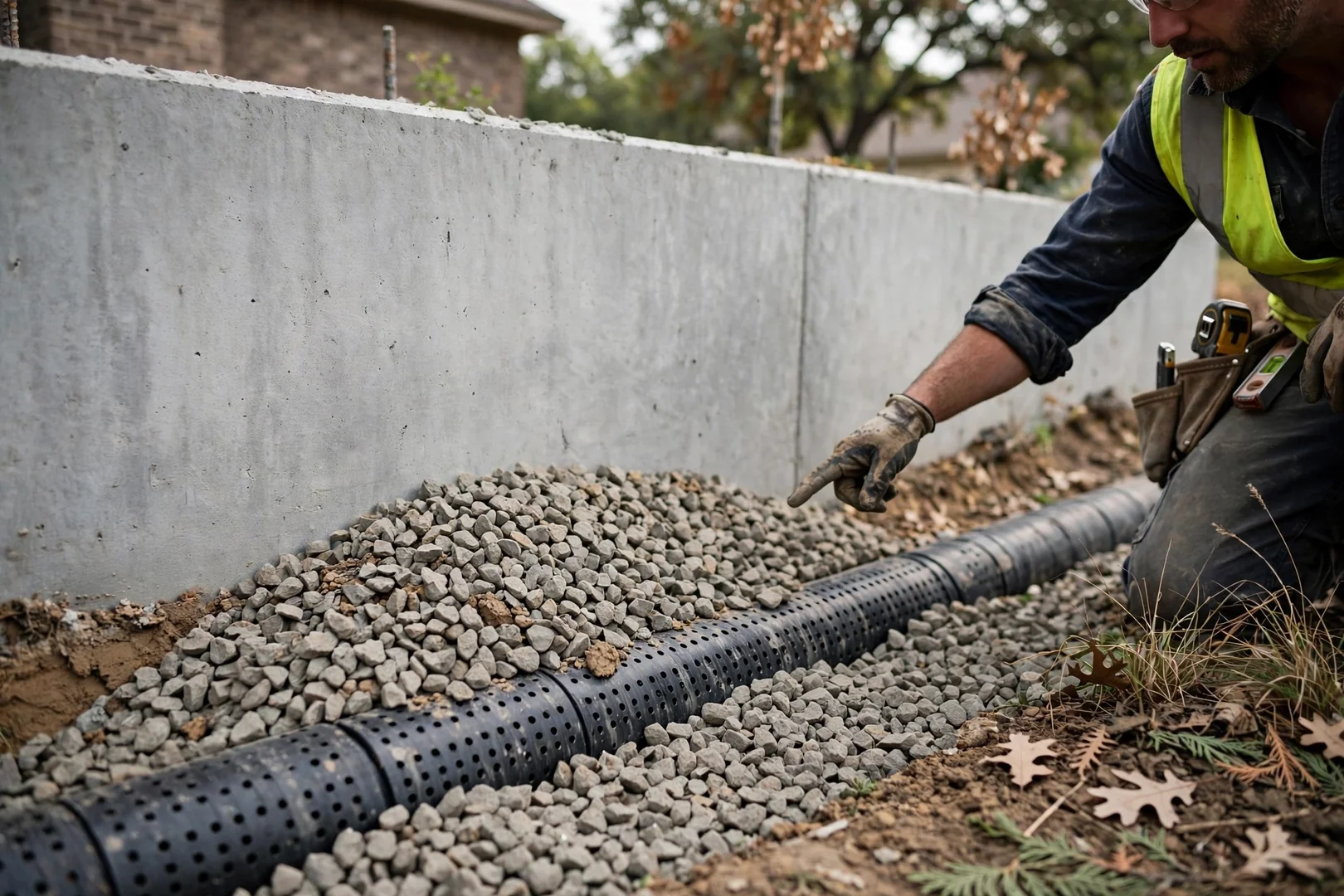
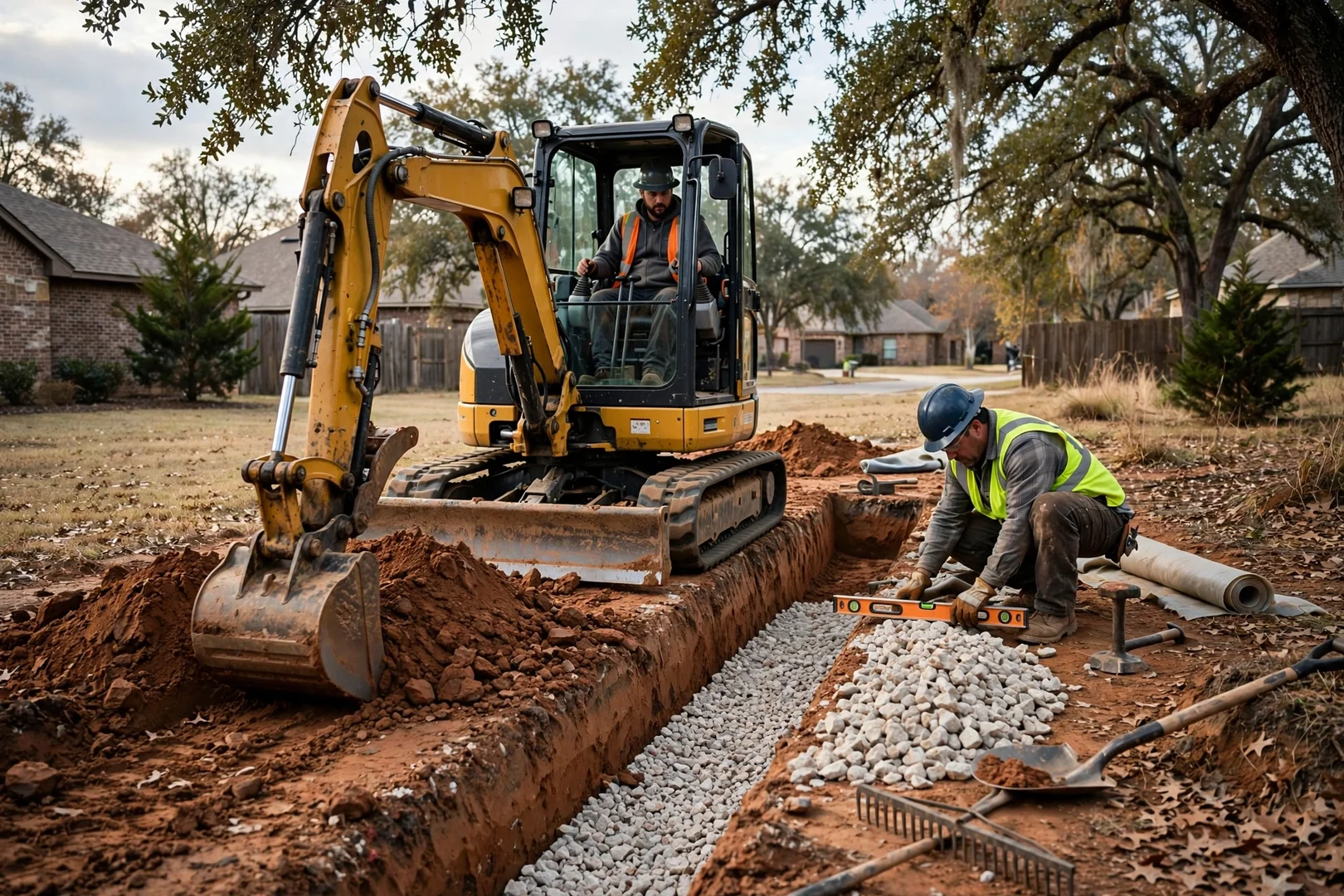
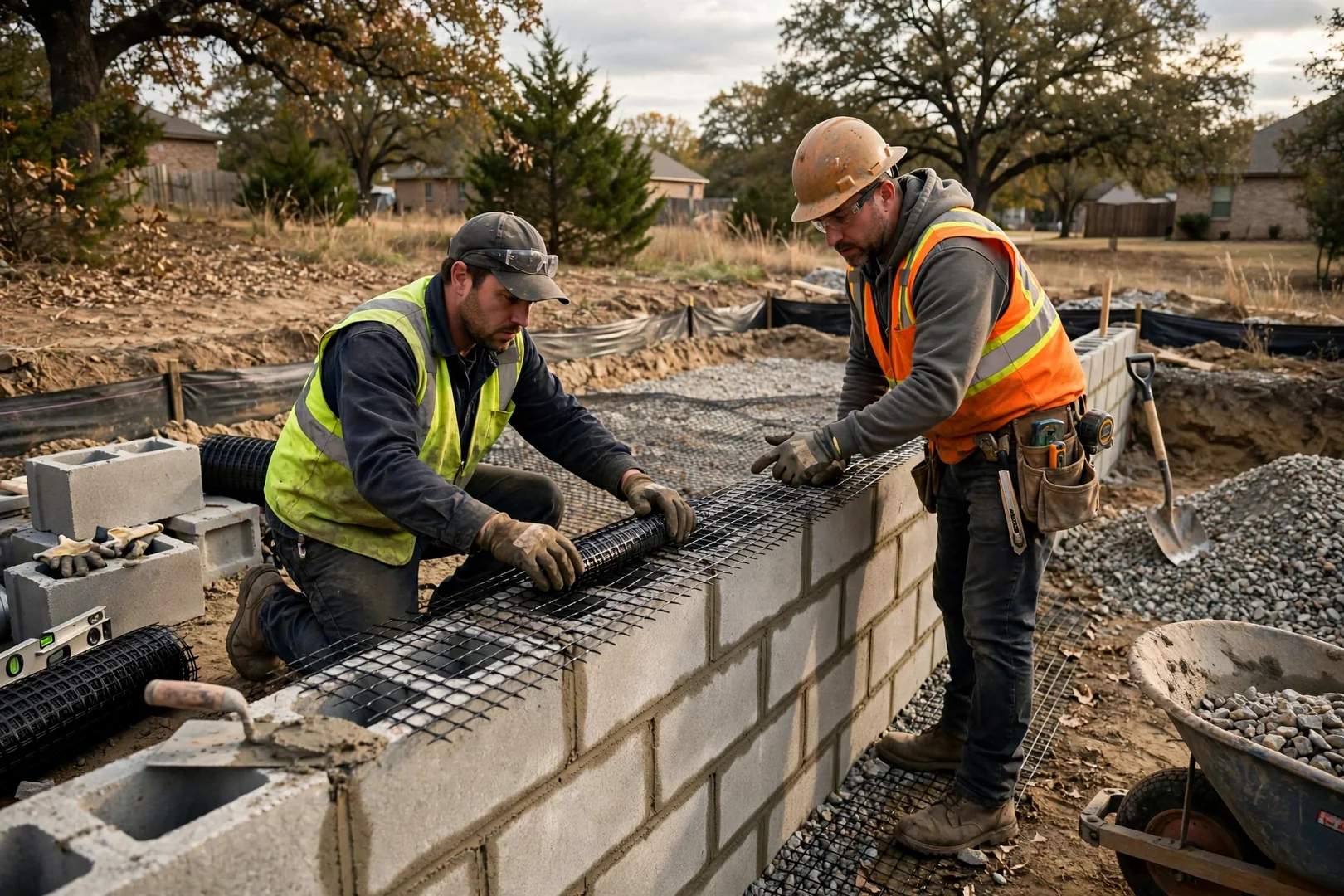
Trenching follows the staked layout, with the leveling pad cut below finished grade and compacted in lifts using a plate compactor. Crushed stone is screeded flat so the first course sits true, since base accuracy controls the entire wall. Courses are then set with proper batter, geogrid is placed where height demands it, and drain tile with filter fabric is installed behind the block or poured face.

Backfill, Grading, and Final Walkthrough

Gravel backfill goes in alongside compaction checks, then soil is graded to shed water away from the structure rather than toward it. Caps are adhered, joints are cleaned, and the surrounding landscape is restored. A post-job walkthrough covers drainage behavior, seasonal monitoring tips for clay soil movement, and maintenance expectations in plain language.

Retaining Wall Installation and Repair Work Completed in Corinth in 2026

Finished terraced block retaining wall stabilizing a steep residential backyard slope
Close-up of perforated drain tile and gravel backfill behind a new wall
Bulging older garden wall showing lateral soil pressure before rebuild begins
Compact excavator cutting a level trench for a retaining wall base course
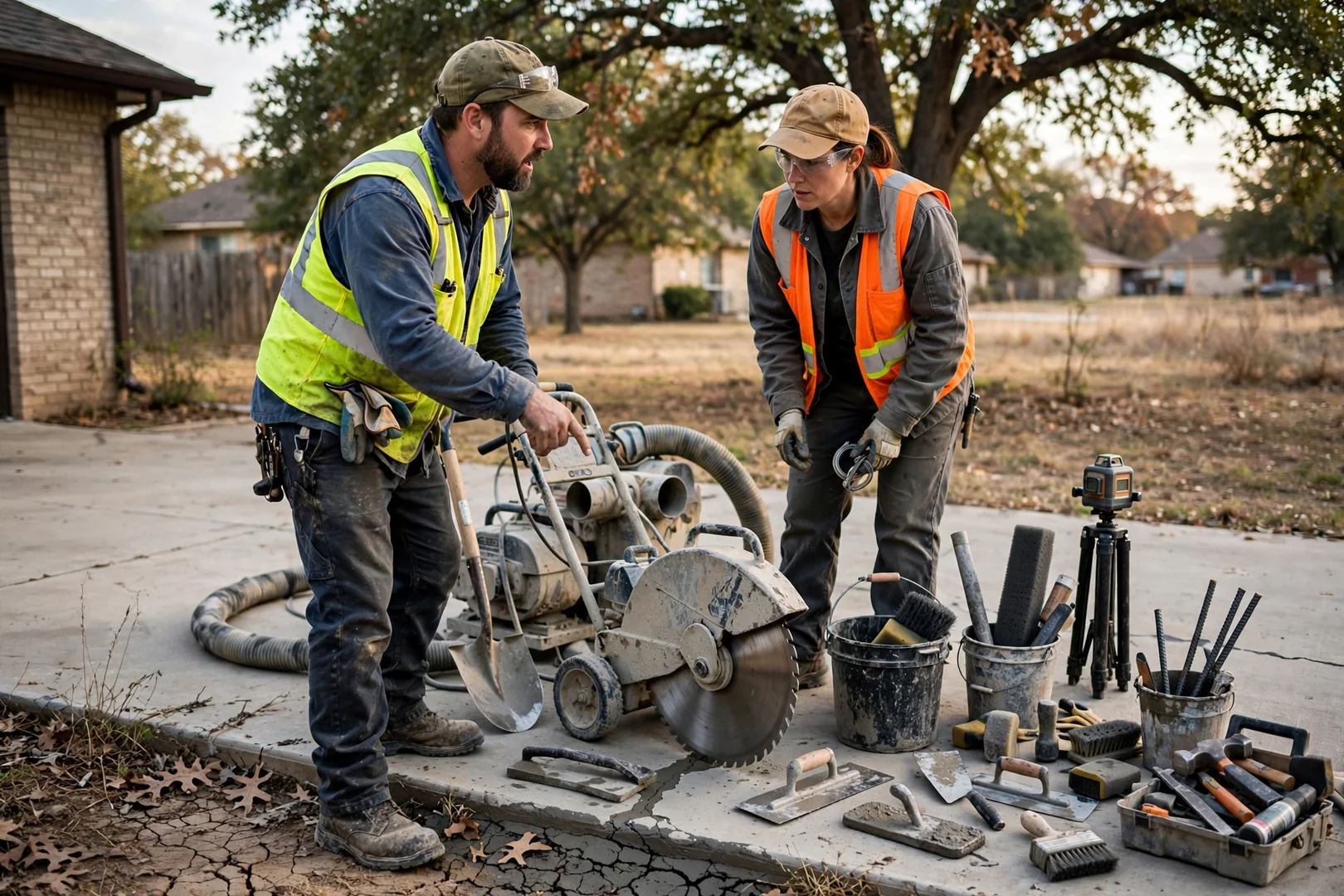
Concrete equipment ready for customer walkthrough
Geogrid reinforcement layer placed between block courses during wall construction
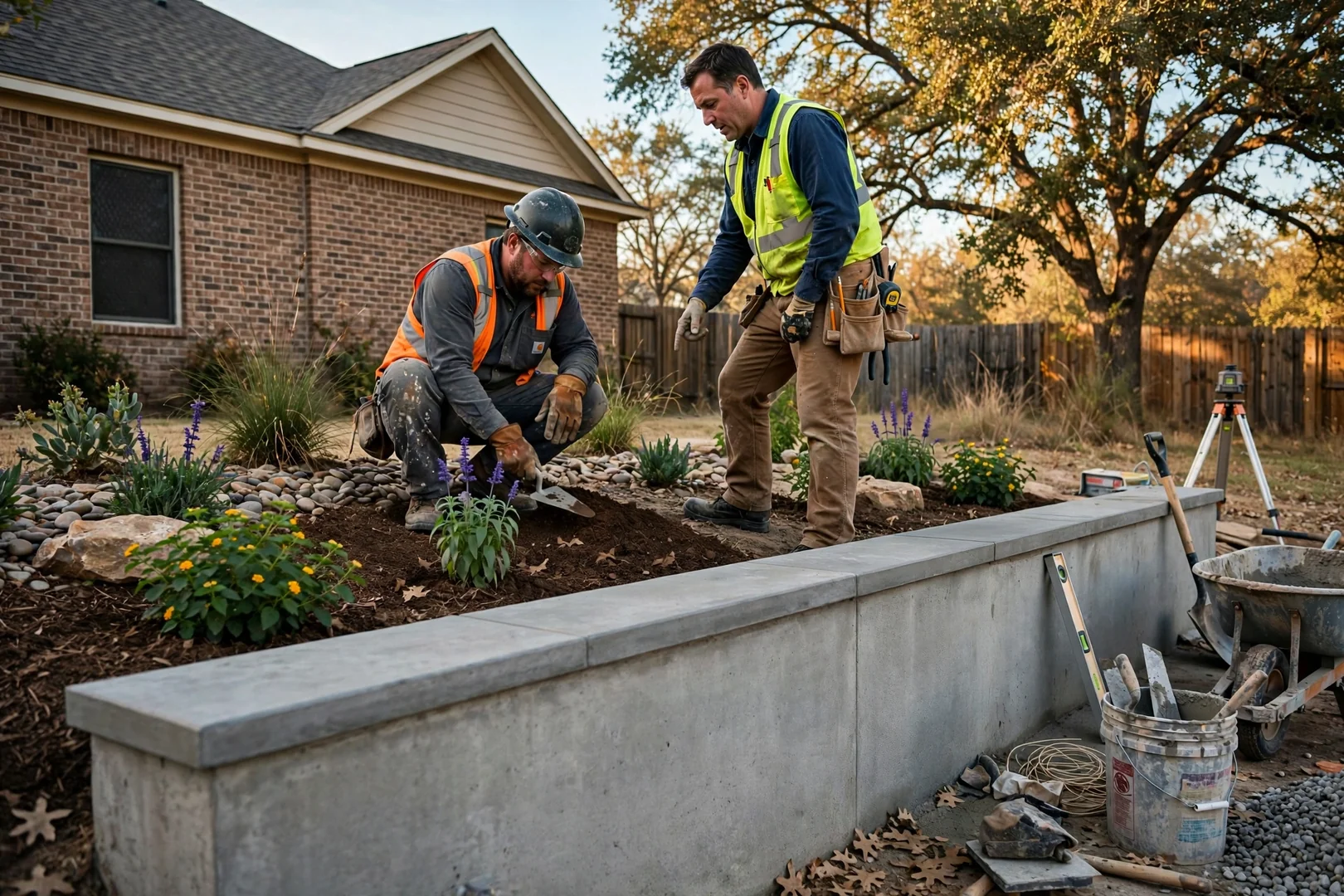
Capped seating wall and graded planting bed completed behind a Corinth home

Retaining Wall Questions

Retaining Wall Installation & Repair FAQs for Corinth Property Owners

Retaining walls carry real structural load, so most of the questions we field center on drainage, base preparation, and how long a wall should hold its line. The answers below reflect what Corinth customers ask most often heading into 2026, from scheduling windows to what a written estimate actually covers.

Grade changes around Lake Lewisville and the expansive clay soils common throughout Denton County shape nearly every design decision on a wall project. If your situation involves something not addressed here, call 940-305-2078 and we will walk the slope with you.

Request a Wall Assessment

Most residential retaining walls take two to five working days once excavation begins, depending on wall height, length, and whether tiebacks or geogrid reinforcement are specified. Trenching the footing, compacting the base course, and setting each block to grade account for the bulk of that time. Weather delays are factored into the schedule we give you upfront, since saturated clay cannot be compacted properly.

A standard installation includes excavation, a compacted gravel leveling pad, the wall units or poured concrete face, drainage aggregate behind the wall, perforated drain pipe with an outlet, filter fabric, and backfill with compaction in lifts. We also handle cap placement and haul-off of spoil material. Anything outside that scope, such as new landscaping or irrigation relocation, is listed separately on the written estimate.

Leaning walls in Corinth almost always trace back to hydrostatic pressure from blocked or missing drainage behind the structure, made worse by the shrink-swell behavior of local clay soil. When heavy spring storms saturate the backfill and no drain pipe carries water out, the wall absorbs lateral load it was never designed to hold. Repair usually means rebuilding the drainage layer rather than simply resetting the face.

Cost depends on wall height, linear footage, material choice, site access for equipment, and whether engineered reinforcement such as geogrid is required above certain heights. Walls that need deeper footings in unstable soil or hand-carried block because of tight backyard access take more labor. We measure the slope on site and provide a written estimate that breaks out excavation, drainage, and materials.

Clear the work zone of planters, furniture, and fencing panels where possible, and mark any private irrigation lines or low-voltage lighting that is not on public utility locates. We schedule 811 locates ahead of excavation, but private lines are not included in that service. For 2026 projects, we also confirm property line setbacks and any HOA or Corinth permitting requirements during the initial walkthrough.

Contractor measuring a segmental block retaining wall along a sloped Corinth backyardGravel backfill and drainage pipe set behind new wall Finished stone retaining wall supporting a terraced residential yard

Free Retaining Wall Estimates

Schedule Retaining Wall Installation and Repair in Corinth

Planning a new segmental block wall or correcting one that has started to lean? Our crew visits the property, checks drainage patterns and soil behavior behind the existing wall, then puts every recommendation in a written estimate. There is no obligation attached.

Clay-heavy soils around Corinth shift with each wet-to-dry swing, so walls built without proper geogrid reinforcement and gravel backfill tend to show movement within a few seasons. We explain what we find, what the repair sequence involves, and which materials suit your slope and grade before any work is booked.

Our 2026 project calendar is open, and most site assessments can be scheduled within days. Call or email to set a visit, review your written estimate, and get your retaining wall moving forward.

CALL US AT 940-305-2078